
Microsoft Fabric consulting is help to decide whether Fabric fits your business, then design, build and secure it. Fabric is Microsoft’s analytics platform that puts data pipelines, lakehouses, warehouses and Power BI on shared OneLake storage. Hoist DigiSoft’s Fabric consultants give you a straight answer first: move to Fabric, stay on Power BI, or wait.
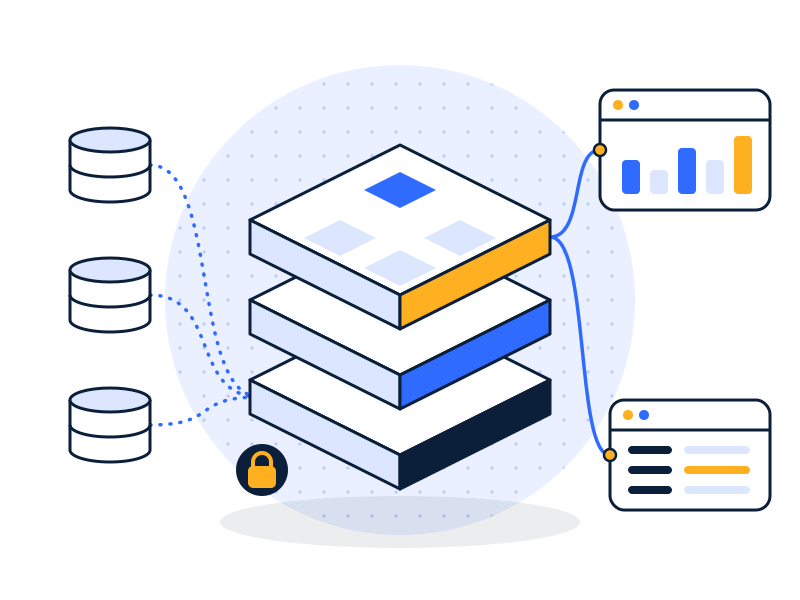
What Is Microsoft Fabric, in Plain Terms?
Microsoft Fabric is a software-as-a-service analytics platform. Instead of buying and wiring together separate Azure services, you get one environment with these main workloads:
- Data Factory for pipelines and dataflows, with more than 200 native connectors.
- Data Engineering with Apache Spark notebooks and lakehouses.
- Data Warehouse with SQL, storing data in the open Delta Lake format.
- Real-Time Intelligence for streaming data such as sensor readings or logs.
- Data Science for building and running machine learning models.
- Power BI for reports and semantic models.
All of these read and write to OneLake, one logical data lake per tenant built on Azure Data Lake Storage. Shortcuts let OneLake point at data in Azure Data Lake Storage, Amazon S3 or Google Cloud Storage without copying it, and mirroring replicates sources such as Azure SQL Database, Azure Cosmos DB, Azure Databricks and Snowflake into OneLake.
When Does Microsoft Fabric Make Sense, and When Doesn’t It?
Fabric is a good platform. It is not the right next step for everyone. Here is how we decide.
| Fabric usually makes sense when… | Staying on Power BI + your current warehouse usually makes sense when… |
|---|---|
| You are already on Microsoft 365 and Azure and want fewer vendors | Your warehouse (Snowflake, BigQuery, Redshift, Azure SQL) works and your team knows it |
| You have many Power BI viewers, and a capacity would replace a lot of per-user licenses | Most report viewers already have Pro licenses and the total is modest |
| You have no warehouse yet and want to build one inside Microsoft | Your pain is messy reports and definitions, not the platform |
| You need Spark, streaming or data science next to BI | Your data is small enough for Power BI plus a simple SQL database |
| You run Power BI Premium P capacity, which Microsoft is retiring in favor of F capacity | Nobody on your team will own pipelines and capacity monitoring |
Our honest default: if the problem is “our numbers don’t match,” fix the model and definitions first. A new platform under a broken model gives you broken numbers on a newer platform. If the problem is “we have no central data and we live in Microsoft,” Fabric is often a strong choice.
How Does Fabric Licensing Affect the Decision?
Fabric runs on capacity, sized in F SKUs from F2 to F8192. F capacity is bought through Azure and billed per second with no commitment, with an optional yearly reservation. A few rules shape the design:
- Below F64, everyone who views Power BI content needs a Pro or Premium Per User license.
- At F64 or above, users with a free license and a viewer role can view Power BI content.
- Report creators still need Pro or PPU to build and share Power BI items.
- Premium Per User does not include Fabric capacity, so lakehouses, warehouses and notebooks need an F or trial capacity.
- A 60-day trial gives F64-equivalent capacity to test.
We don’t publish prices because Microsoft prices are regional and change. In the audit, we model your user counts and workloads against current Microsoft Fabric pricing and show the break-even point.
What Does Our Microsoft Fabric Consulting Cover?
Fabric Readiness Assessment
Current sources, warehouse, Power BI estate, licenses and skills. You get a written recommendation: adopt, adopt later, or don’t, with the reasons.
Microsoft Fabric Data Engineering
Lakehouse design using a layered pattern (raw, cleaned, business-ready), Data Factory pipelines, Spark notebooks for heavier transformations, and scheduling with failure alerts.
Fabric Data Warehouse
SQL warehouse design with star schemas for reporting, built for Power BI’s Direct Lake or import modes depending on size and refresh needs.
Migration
Moving from Azure Synapse, Azure Data Factory, SQL Server or Power BI Premium P capacity into Fabric, in phases, with numbers reconciled before anything old is switched off. If you keep Snowflake or Databricks, we can mirror instead of migrate.
Power BI on Fabric
Shared semantic models, deployment pipelines and workspace structure. See Power BI consulting.
Capacity and Cost Governance
Right-sizing capacity, separating development from production, and monitoring which workloads use the most capacity.
How Do We Secure a Microsoft Fabric Environment?
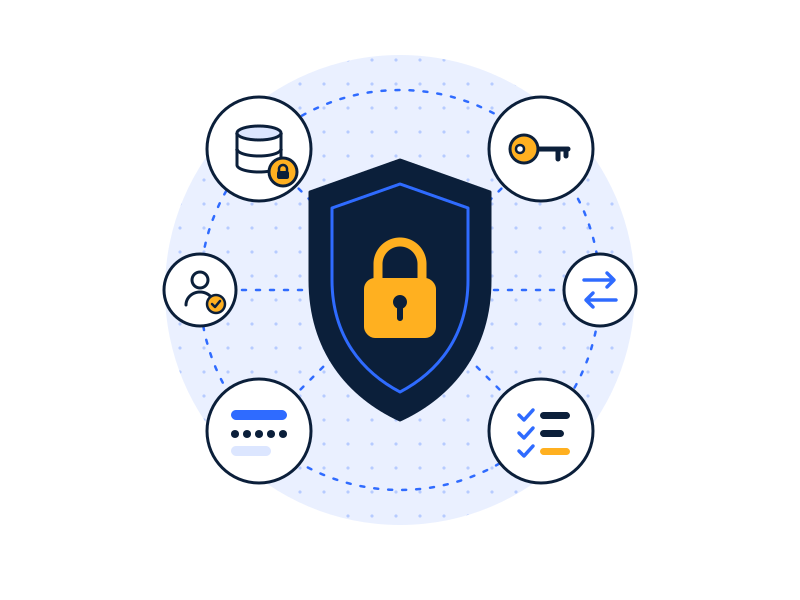
One platform holding all your data is convenient. It also means one set of permissions protects everything, so we set them up carefully:
- Identity and MFA. Sign-in through Microsoft Entra ID, with multi-factor authentication and conditional access enforced by your admins.
- Least-privilege workspaces. Separate workspaces for raw, curated and reporting data; group-based roles; few people with admin or contributor rights.
- Row-level and object-level security in the warehouse and semantic models, so each user sees only their rows and columns.
- Encryption at rest and in transit, managed by Microsoft, plus sensitivity labels through Microsoft Purview where you license it.
- Network controls. Managed private endpoints on F capacity where sources sit in private networks.
- Audit logs of access and changes, reviewed by your admins.
- Your tenant, your data. We work inside your Microsoft tenant under NDA. Our access is removed when the work ends.
HIPAA readiness. If your Fabric data includes protected health information, we design to the HIPAA Security Rule’s technical safeguards (access control, audit controls, integrity, authentication and transmission security), keep PHI in tightly restricted workspaces, and de-identify data for wider reporting. Your organization remains responsible for HIPAA compliance; we build the technical controls that support it. See data security services.
How Does a Fabric Project Run?

- Audit
- Architect
- Build & Secure
- Run & Improve
- Audit. Readiness assessment and license model. Often the trial capacity is used for a small proof of concept.
- Architect. Workspace layout, lakehouse and warehouse design, security roles and capacity plan.
- Build & Secure. Pipelines and models in weekly increments, with access controls in place before real data lands.
- Run & Improve. Capacity monitoring, deployment pipelines, documentation and training.
What Does a Fabric Decision Look Like?
Illustrative example. Not a client project.
A 300-person company has Power BI Pro for 40 report builders and 220 viewers, an on-premises SQL Server and a lot of Excel. They ask whether to move to Fabric.
- Audit: viewers outnumber builders more than five to one; there is no warehouse; the SQL Server is near end of support.
- Recommendation: a Fabric warehouse replaces the ageing SQL Server reporting load, and capacity sizing is modeled against Pro costs before any purchase.
- Proof of concept: finance data in the trial capacity for four weeks, numbers reconciled to the ERP.
A different company with Snowflake, a strong data team and 30 Pro users would usually get the opposite answer: stay put and fix the Power BI models.
Related: data warehouse consulting · data analytics consulting · business intelligence consulting
FAQs
What does a Microsoft Fabric consultant do?
A Microsoft Fabric consultant assesses whether Fabric suits your business, then designs and builds it: lakehouses, warehouses, Data Factory pipelines, Spark notebooks, Power BI semantic models, security and capacity planning. A good consultant will also tell you when staying on your current warehouse and Power BI is the better choice.
Is Microsoft Fabric replacing Power BI?
No. Power BI is one of the workloads inside Microsoft Fabric. You can keep using Power BI with Pro or Premium Per User licenses without adopting other Fabric workloads. Microsoft is retiring Power BI Premium per-capacity P SKUs and recommends Fabric F capacity for capacity customers.
What is Microsoft Fabric data engineering?
Fabric Data Engineering is the workload for preparing data at scale. It provides lakehouses on OneLake, Apache Spark notebooks and Spark job definitions, orchestrated with Data Factory pipelines. It suits heavier transformations, semi-structured data and large volumes that are awkward in SQL or Power Query alone.
Do we have to move off Snowflake or Databricks to use Fabric?
No. Fabric can mirror Snowflake and Azure Databricks data into OneLake, and shortcuts can point at data in Azure Data Lake Storage, Amazon S3 or Google Cloud Storage without copying it. Many companies keep their existing platform and use Fabric mainly for Power BI and new workloads.
Is Microsoft Fabric secure enough for health data?
Fabric provides Microsoft Entra ID sign-in, workspace roles, row-level and object-level security, encryption and audit logging. Whether a deployment is HIPAA-ready depends on how it is configured. We design PHI workloads to the HIPAA Security Rule’s technical safeguards; HIPAA compliance remains your organization’s responsibility.
Fabric, Later, or Not at All?
In a free 30-minute data audit we’ll look at your data, Power BI estate and licenses, and give you a straight recommendation.