
Data integration, warehousing, BI and encryption from one team instead of three vendors.
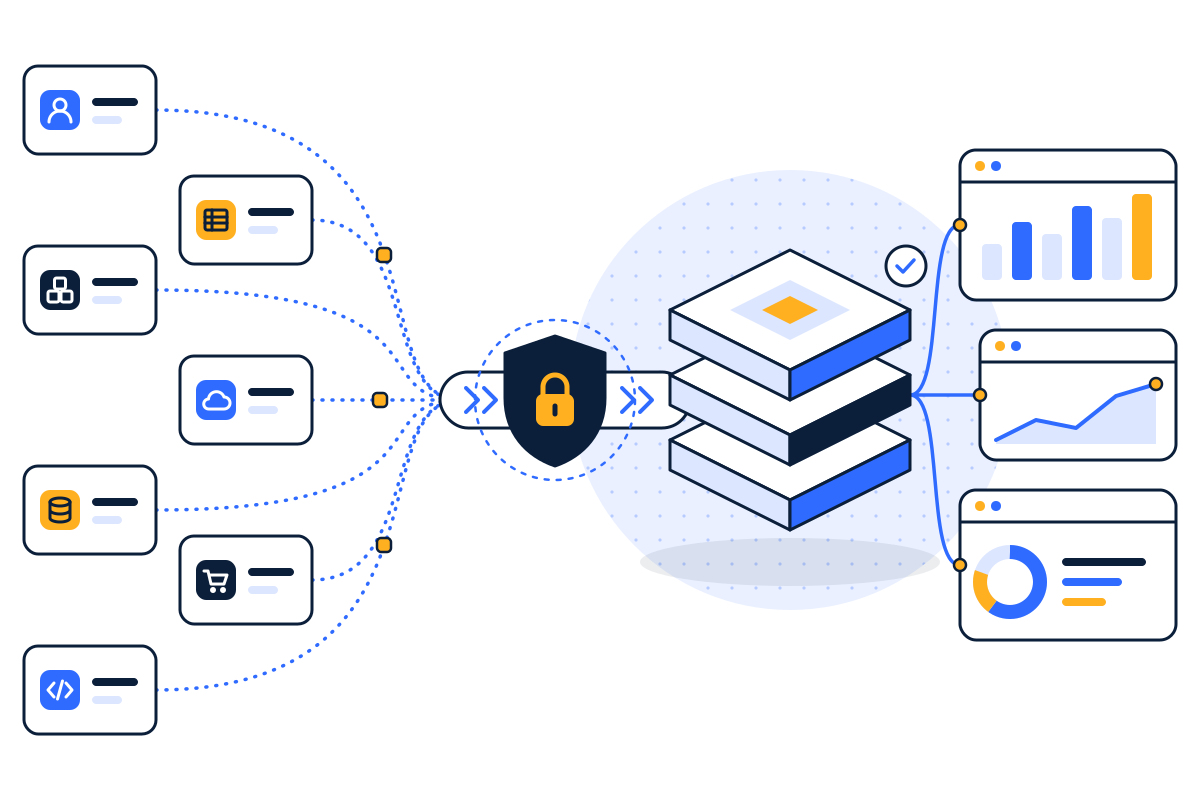
Hoist DigiSoft is a data and analytics consulting company. We consolidate a business’s scattered data (CRM, ERP, finance, operations) into one secure, unified database, then build the warehouse, dashboards and predictive models that run on it. We work with mid-sized companies in the United States, Australia and Canada.
What do our data analytics consulting services cover?
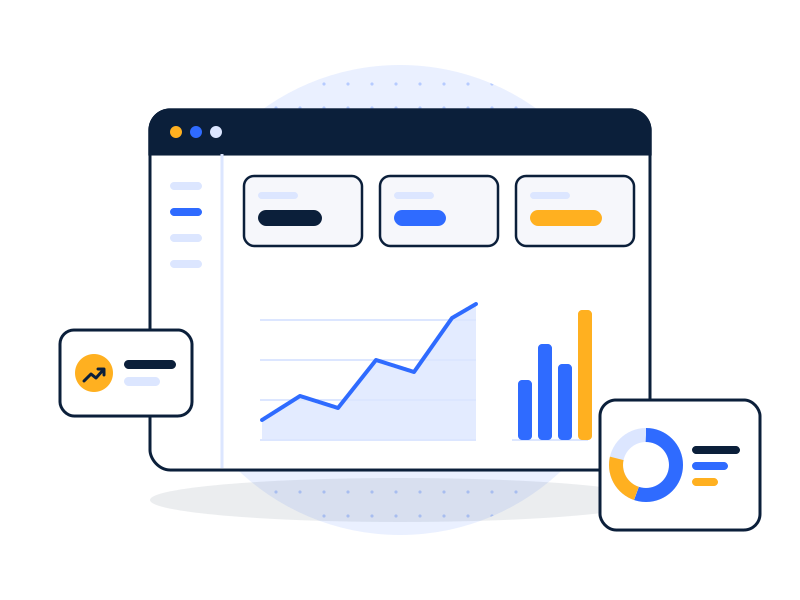
Seven services, one team. You can start with any of them, but they are designed to fit together: connect the data, store it properly, report on it, predict from it, and lock it down at every step.
| Service | What you get | Link |
|---|---|---|
| Data integration & unified database | Your CRM, ERP, accounting and app data in one clean, matched database. | Centralize my data |
| Data warehousing | A cloud data warehouse built for reporting, on Snowflake, BigQuery, Redshift, Azure Synapse/Fabric or SQL Server. | Build my warehouse |
| Business intelligence | KPIs, data models and dashboards people trust. | Fix my reporting |
| Power BI consulting | Power BI models, DAX, dashboards, governance and training. | Fix my Power BI |
| Data mining & predictive analytics | Forecasts and models for demand, churn, pricing and risk. | Forecast my numbers |
| Application integration | Your apps passing orders, customers and invoices to each other automatically. | Connect my apps |
| Data security & encryption | Encryption at rest and in transit, key management, access control and audit logs. | Secure my data |
Why does nobody trust the numbers?
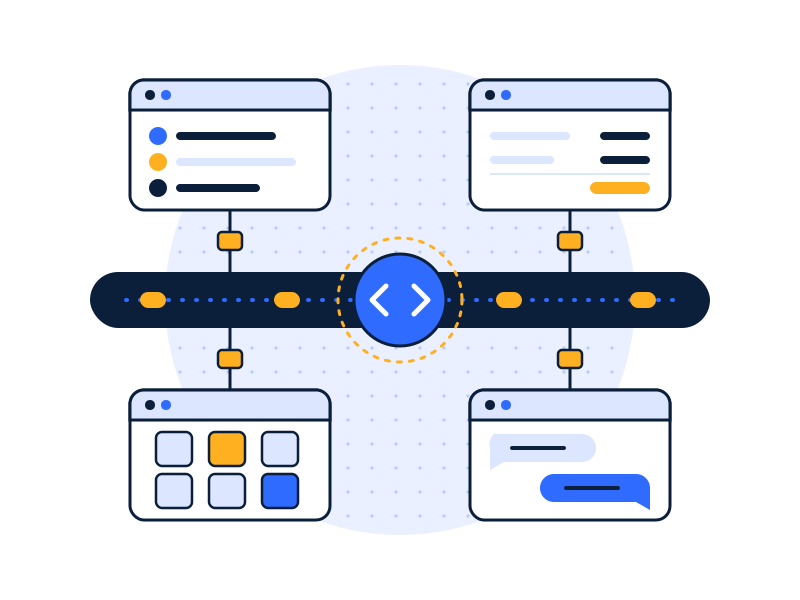
Because the numbers come from different places.
Sales pulls revenue from the CRM. Finance pulls it from the accounting system. Operations has a spreadsheet that someone updates on Fridays. All three are “right”, and all three are different. So the Monday meeting turns into a debate about whose number to use, instead of what to do about it.
Large organizations feel this at scale. MuleSoft’s 2025 Connectivity Benchmark found the average enterprise runs 897 applications and only 29% of them are integrated. Mid-sized companies run fewer apps, but usually with fewer people to stitch them together, so the manual work lands on whoever owns the spreadsheet.
The cost is real. Gartner estimates poor data quality costs organizations an average of $12.9 million a year. You don’t need that figure to know the feeling: month-end takes too long, reports go out late, and the one person who knows how the spreadsheet works is the bottleneck.
The old way vs the Hoist way
| The old way | With a unified, secured data layer | |
|---|---|---|
| Where the numbers live | CRM, ERP, accounting, inboxes, spreadsheets | One governed database every report reads from |
| How reports get made | Export, paste, fix formulas, email | Scheduled refresh from source systems |
| Who can see what | Whoever has the file | Role-based access, logged |
| Data in transit | CSVs attached to emails | Encrypted connections (TLS) end to end |
| When something breaks | Someone notices weeks later | Pipeline alerts the same day |
How do we work?
Four steps. Each one ends with something you can see and approve before we start the next.

- Audit
- Architect
- Build & Secure
- Run & Improve
- Audit. We map your systems, data owners, reports and access. You get a written picture of where your data lives, what’s broken and what’s exposed. It starts with the free 30-minute data audit.
- Architect. We design the target: which sources feed one unified database, how the data warehouse is modeled (a star schema and a semantic layer with one definition per metric), and who can see what. You approve the design before we build.
- Build & Secure. We build the pipelines, match duplicate records, model the warehouse and create the dashboards your leaders actually open, in Power BI, Tableau, Looker or Qlik. Encryption, key management, least-privilege access and audit logging go in at the same time, not at the end. See data integration and data security.
- Run & Improve. We monitor refreshes and data quality, train your team, hand over documentation, and add sources, dashboards or predictive models as you grow.
What does a project look like?
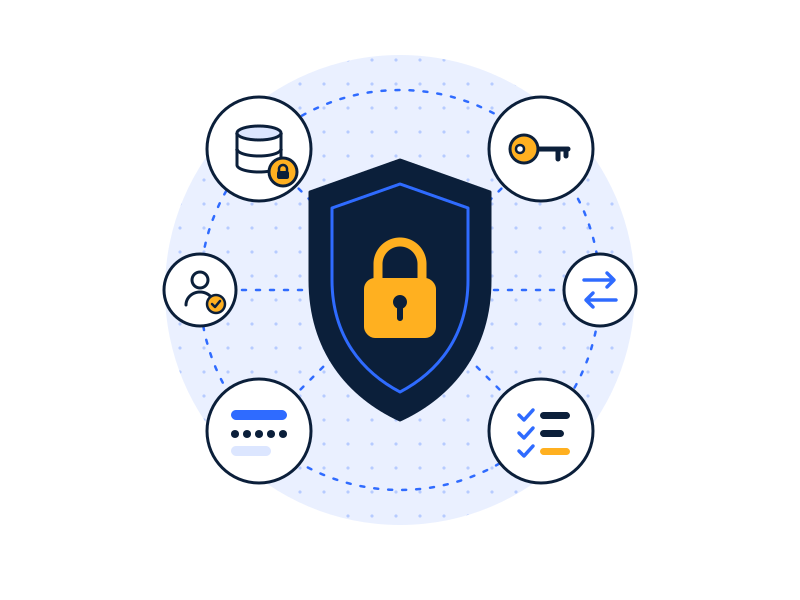
Illustrative example. Not a client project.
A 150-person distributor runs HubSpot for sales, NetSuite for finance and a warehouse spreadsheet for stock. Leadership wants one weekly view of revenue, margin and stock cover.
- Audit (weeks 1 to 2): map the three sources, list who should see what.
- Architect (week 2): agree on definitions of “revenue” and “margin”, design the warehouse model and access rules.
- Build & Secure (weeks 3 to 8): pipelines from HubSpot and NetSuite into a cloud warehouse in the client’s own cloud account, stock sheet replaced by a governed table, customer records matched, encrypted connections, then one executive dashboard plus sales and finance views with row-level security so each regional manager sees only their region.
- Run & Improve (ongoing): daily refresh monitored, team trained, next sources queued.
Your timeline depends on how many systems you run and how clean they are. The audit is where we give you a realistic one.
Which industries do we serve?
Data problems look similar everywhere, but the systems, KPIs and rules differ. We shape the work around yours.
- Healthcare: EHR, billing and scheduling data in one secured warehouse.
- Financial services & insurance: policy, claims and finance data with audit trails.
- Retail & ecommerce: Shopify, POS, ads and inventory in one margin view.
- Manufacturing, logistics & supply chain: ERP, MES, IoT and fleet data for OEE and on-time delivery.
- SaaS & technology: product, billing and CRM data for revenue and churn.
- Professional services: time, billing and project data for utilization and margin.
- Real estate: property, leasing and finance data for occupancy and asset performance.
Why hire a specialist data analytics consulting company?
Because data work fails in the gaps between vendors. One firm builds the pipelines, another builds the dashboards, a third reviews security, and nobody owns the whole thing. We do integration, warehousing, BI and security as one team, so there’s one owner for whether the numbers are right and whether they’re safe.
What you can hold us to:
- US business hours. Our teams in the USA and India work US business hours, with overlap with Australian and Canadian business days, for calls, reviews and fixes.
- NDA before access. We sign your NDA (or ours) before we see a single table.
- Your cloud, your data. Wherever possible we build inside your own Azure, AWS or Google Cloud account, so data doesn’t leave your environment.
- Least-privilege access. We get only the access each task needs, through your SSO where possible, and you can revoke it at any time.
- Encryption by default. Data is encrypted at rest and in transit across everything we build.
- No lock-in. You own the code, the models and the documentation.
Platforms we work with: Power BI, Microsoft Fabric, Azure Synapse, Azure Data Factory, SQL Server, Snowflake, dbt, Fivetran, AWS Redshift, AWS Glue, Google BigQuery, Looker, Tableau and Qlik. We name these as tools we work with, not as partnerships.
Power BI: our team is Microsoft-certified in Power BI.
FAQs
What does a data analytics consulting company do?
A data analytics consulting company helps a business collect, clean, store and analyze its data so leaders can make decisions from it. Typical work includes connecting source systems, building a data warehouse, designing dashboards and KPIs, building predictive models, and securing the data. Hoist DigiSoft does all of these as one team.
How long does a typical data project take?
A focused first project, such as connecting three systems and building one executive dashboard, often takes six to ten weeks. Larger warehouse builds or migrations take longer. The timeline depends on how many sources you have, how clean they are, and how fast decisions get made. We give you a realistic estimate after the audit.
Do we need a data warehouse before we can use BI?
Not always. A data warehouse is a central database built for reporting. If you report from one or two clean sources, BI tools can connect directly. Once you combine several systems, need history, or have slow reports, a warehouse becomes the cheaper and more reliable option. The audit tells you which camp you’re in.
Which tools do you work with?
We work with Power BI, Microsoft Fabric, Azure Synapse, Azure Data Factory, SQL Server, Snowflake, dbt, Fivetran, AWS Redshift and Glue, Google BigQuery and Looker, Tableau and Qlik. We usually build on what you already own. If you have nothing yet, we recommend tools based on your data volume, team skills and existing contracts.
Do you work with companies outside the US?
Yes. We work with companies in the United States first, and also in Australia and Canada. We schedule meeting overlap with your business hours, and where data residency matters we build in your preferred cloud region, so Australian or Canadian data can stay in-country.
How do you keep our data secure?
Data security means protecting data wherever it’s stored or moved. We sign an NDA first, work inside your cloud account where possible, use least-privilege access through your SSO, encrypt data at rest and in transit, and log access. You can revoke our access at any time, and you own every credential.
Final CTA block
Find out where your data is costing you time, and where it’s exposed.
In 30 minutes we’ll map your systems, point out the biggest reporting and security gaps, and tell you what we’d fix first. No pitch deck, no obligation.