
Healthcare data analytics consulting helps providers and health organizations combine data from EHR, billing, scheduling and other systems into one secure warehouse, then report on operations and revenue from it. Hoist DigiSoft builds HIPAA-aligned data platforms and dashboards, with encryption, minimum-necessary access and audit logging designed in from the start.
What are the data challenges in healthcare?
Health organizations generate a lot of data and struggle to use it, for reasons that are mostly structural:
- Systems that don’t share. The EHR, billing or revenue-cycle platform, scheduling, patient engagement, HR and finance tools each hold part of the picture.
- Reporting locked inside vendors. Built-in EHR reports answer the vendor’s questions, not yours, and exports land in spreadsheets.
- Sensitive data everywhere. Protected health information ends up in exports, inboxes and shared drives because there’s no safe central place to analyze it.
- Multi-site complexity. Groups with several locations or specialties can’t compare them on the same definitions.
- High stakes. IBM’s 2026 research found healthcare had the highest average breach cost of any industry, at $6.64 million.
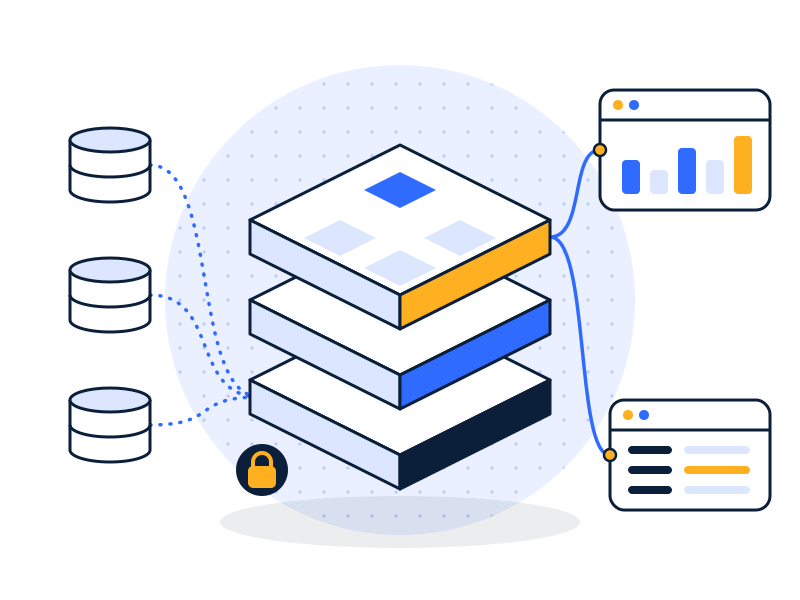
The goal isn’t more dashboards. It’s one secured place where operational and financial data can be analyzed without spreading PHI further.
Which systems do we connect?
Typical healthcare sources include:
- EHR/EMR platforms, through vendor reporting databases, APIs or approved extracts.
- Billing and revenue-cycle systems: charges, claims, remits and denials.
- Scheduling and patient engagement tools: appointments, cancellations, reminders.
- Finance and HR: general ledger, payroll, staffing.
- Standards-based feeds: HL7 v2 messages and FHIR APIs where the source system supports them.
We prefer the least sensitive route that answers the question. If a dashboard only needs counts by location and week, the pipeline doesn’t carry names or record numbers.
Which KPIs and dashboards do we build?
| Area | Example KPIs | Who uses it |
|---|---|---|
| Access and scheduling | Visit volume, new vs returning patients, no-show and late-cancel rate, time to next available appointment | Operations, site leads |
| Capacity and staffing | Provider utilization, room/slot utilization, staff hours vs visit volume | Operations, HR |
| Revenue cycle | Charges, collections, days in A/R, denial rate by reason and payer, clean claim rate | Finance, revenue cycle |
| Financial performance | Revenue and cost per visit, margin by site and service line, budget vs actual | Leadership, finance |
| Quality and compliance operations | Documentation completion, access review completion, audit log exceptions | Compliance, leadership |
Dashboards are built in Power BI, Tableau, Looker or Qlik, usually on a data warehouse rather than straight on the EHR. Most leadership dashboards use aggregated data only, so the people viewing them never see patient-level detail.
How do we handle compliance and security?
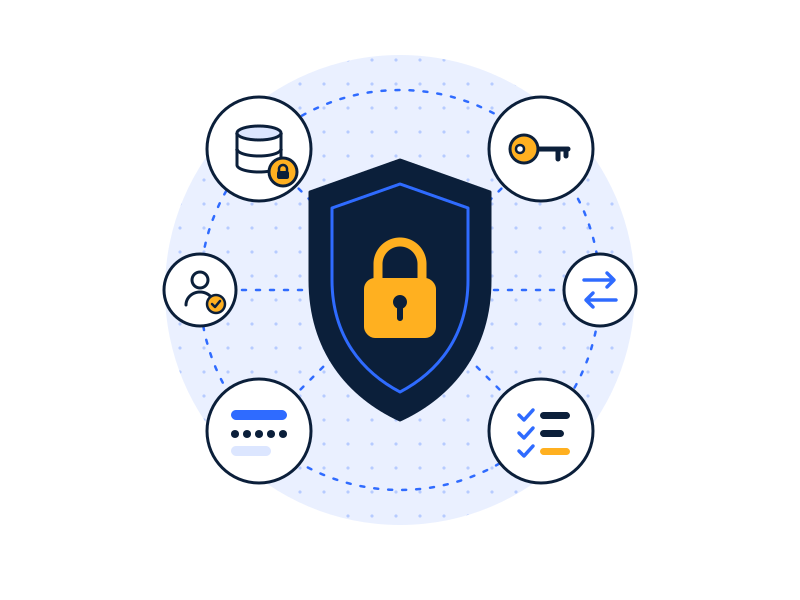
Our team has experience working with HIPAA-regulated health data, and we follow HIPAA-aligned processes on every healthcare project:
- Minimum necessary. We design pipelines and models to carry only the fields each use needs. Direct identifiers are excluded, masked or tokenized wherever the analysis allows.
- Encryption at rest and in transit. AES-256 for stored data, TLS 1.2+ for every connection, with keys in your cloud’s key management service.
- Your environment. We build inside your own cloud account, in a HIPAA-eligible service configuration chosen with your team, so data doesn’t leave your control.
- Access control. SSO, MFA, role-based and row-level security, so each person sees only what their role requires.
- Audit logging. Access to sensitive data is logged and retained according to your policies.
- Business Associate Agreement. We sign a Business Associate Agreement (BAA) before accessing PHI.
Outside the US: for Canadian organizations we design around PIPEDA and provincial health privacy laws (such as Ontario’s PHIPA), and for Australian organizations around the Privacy Act 1988, with data kept in in-country cloud regions where required.
We implement technical controls and help you document them. Compliance also depends on your own policies, training and vendors, and we don’t certify it. Full detail: data security and encryption services.
Is there such a thing as a HIPAA-compliant data warehouse?
There’s no official HIPAA certification for a data warehouse, a cloud platform or a consultant. HHS doesn’t certify products. What exists is a warehouse configured and operated in a way that supports HIPAA’s Security Rule: eligible cloud services under a BAA with the cloud provider, encryption, access controls, audit logs, and the policies around them.
So when you’re evaluating a “HIPAA-compliant data warehouse”, ask:
- Is the cloud service covered by the provider’s BAA, and is that BAA in place?
- Is PHI encrypted at rest and in transit, with keys you control?
- Is access role-based, through SSO with MFA, and reviewed?
- Is every access to PHI logged and retained?
- Does the design carry only the minimum necessary data?
We build to that checklist.
What does a healthcare data project look like?
Illustrative example. Not a client project. No patient data is shown or implied.
A multi-site outpatient group has an EHR, a separate billing system and scheduling in a third tool. Leadership wants one weekly view of visit volume, no-show rate and collections by site.
- Audit: map the three systems and list exactly which fields each KPI needs. None of the leadership KPIs need patient names or record numbers.
- Architect: a warehouse in the group’s own cloud account; patient identifiers tokenized at load; aggregate tables for leadership dashboards.
- Build & Secure: pipelines over encrypted connections, row-level security by site, access logs reviewed monthly.
- Run & Improve: weekly dashboard refresh monitored, definitions documented, next KPIs queued.
Designed outcome: one agreed set of operational and revenue numbers per site, without spreading PHI into spreadsheets.
Related services and use cases
FAQs
What is healthcare data analytics consulting?
Healthcare data analytics consulting is outside expertise to combine and analyze data from systems like EHR, billing and scheduling. Consultants build the pipelines, secured warehouse and dashboards that show operations, capacity and revenue, while protecting patient information with encryption, access controls and minimum-necessary data design.
Can you work with our EHR data?
Usually, yes. Most EHR platforms offer a reporting database, APIs, FHIR endpoints or scheduled extracts. We use whichever route your vendor supports and your team approves, and we pull only the fields each report needs. We confirm feasibility for your specific EHR during the audit.
Is Hoist DigiSoft HIPAA certified?
No, and no one is. There is no official HIPAA certification for consultants or software. Our team has experience working with HIPAA-regulated health data and follows HIPAA-aligned processes: encryption, minimum-necessary access, audit logging and work inside your own cloud environment. Your compliance program stays yours.
Do dashboards show patient-level data?
Only if a specific role needs it and your policies allow it. Most leadership and operations dashboards use aggregated data, such as counts by site and week, so viewers never see patient-level detail. Where patient-level views are needed, row-level security and audit logging control and record who sees them.
See your operations and revenue in one secured place.
Book a free 30-minute data audit. Please don’t share any patient or health information when you book; we only need to know which systems you run.