Data mining is the process of finding patterns, correlations and anomalies in large datasets to predict outcomes. Hoist DigiSoft’s data mining and predictive analytics services build models for churn, demand, pricing and risk on top of your unified data, and put the predictions into the dashboards and apps your team already uses.
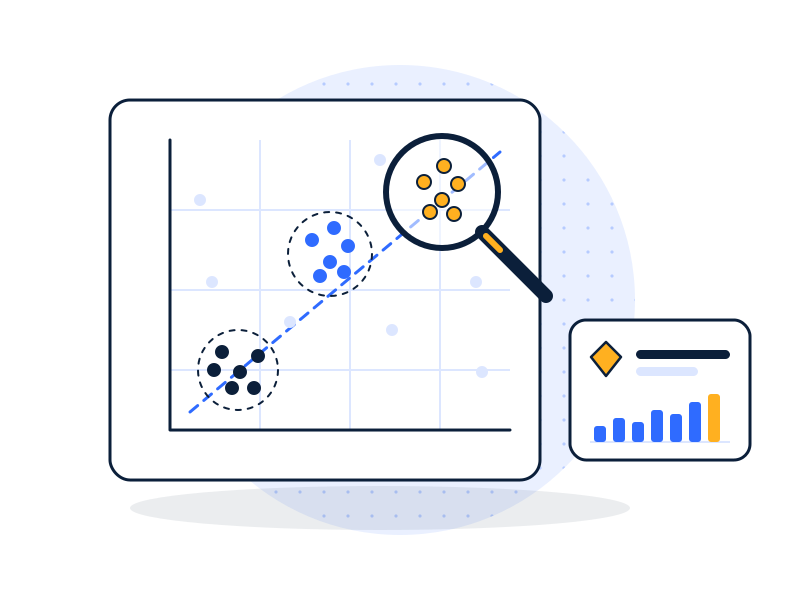
What is data mining?
Data mining means searching historical data for patterns that repeat, then using those patterns to explain or predict what happens next. In practice it answers questions like:
- Which customers look like the ones who left last year?
- How much of each product will we sell in the next eight weeks?
- Which orders, claims or transactions look unusual enough to check?
- Which customer groups behave differently, and why?
The output isn’t a report about the past. It’s a score, a forecast or a flag attached to each customer, product or transaction, so someone can act on it.
What’s the difference between data mining, data analytics and machine learning?
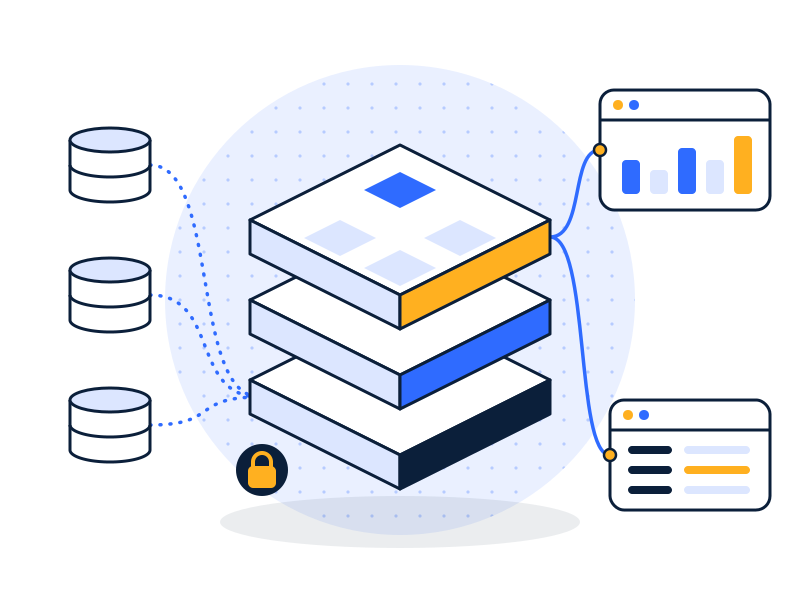
The terms overlap. This is how we use them:
| Data analytics | Data mining | Machine learning | |
|---|---|---|---|
| Main question | What happened, and why? | What patterns are hidden in the data? | What will happen, for each new case? |
| Typical output | Dashboards, reports, trend analysis | Segments, correlations, rules, anomalies | Trained models that score new data automatically |
| Example | Revenue by region, month over month | Customers who buy A often buy B within 30 days | A churn score for every account, updated weekly |
| Who uses it | Managers, analysts | Analysts, data scientists | Systems and apps, via predictions |
Predictive analytics sits across the last two: using mined patterns and machine learning models to forecast outcomes. Most mid-sized companies need dashboards first, then a small number of predictive models that each answer one valuable question.
What do our data mining and predictive analytics services include?
Exploratory data analysis
Before any model, we profile your data: what’s there, what’s missing, what’s wrong and what’s surprising. Often this alone answers the original question.
Customer segmentation
Clustering customers by behavior (purchase patterns, product mix, engagement, payment history) instead of guessing at segments. Useful for pricing, service levels and targeting.
Forecasting
Demand, revenue, staffing and inventory forecasts using your history, seasonality and known drivers. See demand forecasting.
Churn and propensity models
Scores for how likely each customer is to leave, buy again, upgrade or respond, so account teams spend their time where it counts.
Anomaly and fraud detection
Flags for transactions, orders, claims or sensor readings that don’t fit normal patterns, routed to a person for review.
Big data analytics consulting
When data volumes outgrow spreadsheets and single databases (event logs, IoT readings, web clickstreams), we design processing on Snowflake, BigQuery, Redshift, Microsoft Fabric or Spark-based tools, sized to your actual volumes.
What business outcomes can predictive analytics support?
We won’t promise a number before we’ve seen your data, and you should be wary of anyone who does. What we can say is where models typically help:
| Area | What the model does | What your team does with it |
|---|---|---|
| Retention | Scores accounts by churn risk | Calls high-risk, high-value accounts first |
| Inventory | Forecasts demand by SKU and location | Orders closer to real demand; less dead stock and fewer stockouts |
| Pricing | Finds price sensitivity by segment | Tests targeted price changes instead of blanket ones |
| Credit and collections | Scores invoices by late-payment risk | Chases earlier, offers terms selectively |
| Operations | Flags unusual orders, readings or claims | Reviews exceptions instead of checking everything |
Every model ships with a measured baseline (what happens today) and a test plan, so you can see whether it’s working in your business, not in a vendor’s slide.
Why does data quality come first?
A predictive model learns from whatever you feed it. If customer records are duplicated, product codes changed halfway through last year, or returns are missing, the model learns the wrong lessons and makes confident, wrong predictions.
That’s why most of our predictive projects start with data integration and a data warehouse. Gartner estimates poor data quality costs organizations an average of $12.9 million a year, and models amplify that cost because people act on predictions automatically.
If your data is already clean and centralized, we go straight to modeling. The audit tells us which.
Is outsourcing data mining services safe?
It can be, if the work is set up properly. How we handle it:
- NDA first. Signed before we see any data.
- Your environment. We build and train inside your own cloud account wherever possible, so data doesn’t leave it.
- Minimum data. We use only the fields the model needs. Names, emails and other direct identifiers are usually unnecessary and get masked or excluded.
- Least-privilege access. Read-only, scoped service accounts through your SSO, revocable at any time.
- Encryption. At rest and in transit throughout.
- Transparency. You get the code, the features used and the model documentation. No black boxes you can’t inspect.
Our teams in the USA and India work US business hours, with overlap with Australian and Canadian business days. More on our controls: data security and encryption.
How does the process work?

- Audit
- Architect
- Build & Secure
- Run & Improve
- Audit. Agree on one business question, check whether the data can answer it, and set a baseline.
- Architect. Choose the approach, the features, how predictions will reach your team, and how we’ll measure success.
- Build & Secure. Prepare data, train and validate models on held-out history, and deliver scores into your dashboards, CRM or ERP, all inside your secured environment.
- Run & Improve. Monitor accuracy against the baseline, retrain on a schedule, and retire models that stop earning their keep.
A first predictive model usually takes six to ten weeks once the data is centralized.
Industries: retail & ecommerce · manufacturing & logistics · real estate
Related services: business intelligence consulting · Power BI consulting
FAQs
What data do we need for predictive analytics?
Predictive analytics needs historical records of the outcome you want to predict, plus the factors that might influence it. For churn, that’s past customers who left and stayed, with their activity. Usually one to three years of reasonably clean history is enough. We check what you have before recommending a model.
How accurate are predictive models?
Predictive model accuracy depends on data quality, how predictable the outcome is, and how much history exists. No honest consultant guarantees a figure in advance. We test every model on past data it hasn’t seen, compare it to your current method, and only deploy it if it clearly beats that baseline.
Is outsourcing data mining services safe?
Outsourcing data mining is safe when controls are in place: an NDA, work inside your own cloud account, read-only least-privilege access, encryption at rest and in transit, and masking of personal identifiers the model doesn’t need. You should also receive the code and documentation, so nothing about your models is hidden.
How do predictions reach our team?
Predictions reach your team where they already work. We write scores and forecasts into your data warehouse, then surface them in dashboards such as Power BI or Tableau, and push them into tools like your CRM or ERP. A sales rep sees a churn score on the account record, not in a separate app.
Ask your data one good question.
Book a free 30-minute data audit. Bring the question you’d most like to predict, and we’ll tell you whether your data can answer it.