
Data analytics consulting is outside help to turn scattered business data into numbers people trust and act on. Hoist DigiSoft connects your systems, agrees KPI definitions with your team, builds a secure data model, then delivers dashboards and forecasts in Power BI, Tableau or Looker, with access controls and audit logs from day one.
What Do Data Analytics Services Include?
Most companies don’t lack data. They lack one version of it. Sales has the CRM, finance has the ERP, operations has spreadsheets, and every meeting starts with “whose number is right?” Our data analytics services fix the layers underneath the charts, so the charts stop arguing.
Data Audit and KPI Definitions
We list your sources, who owns them and how clean they are. Then we agree the definitions that cause the most arguments: revenue, active customer, margin, churn. Each definition is written down with an owner.
Data Integration and Warehousing
Pipelines pull data from your ERP, CRM, accounting, ecommerce and operations tools into one data warehouse, on Snowflake, BigQuery, Azure SQL, Redshift or Microsoft Fabric. History is kept, so you can compare this quarter to last year without rebuilding a spreadsheet.
Dashboards and Reporting
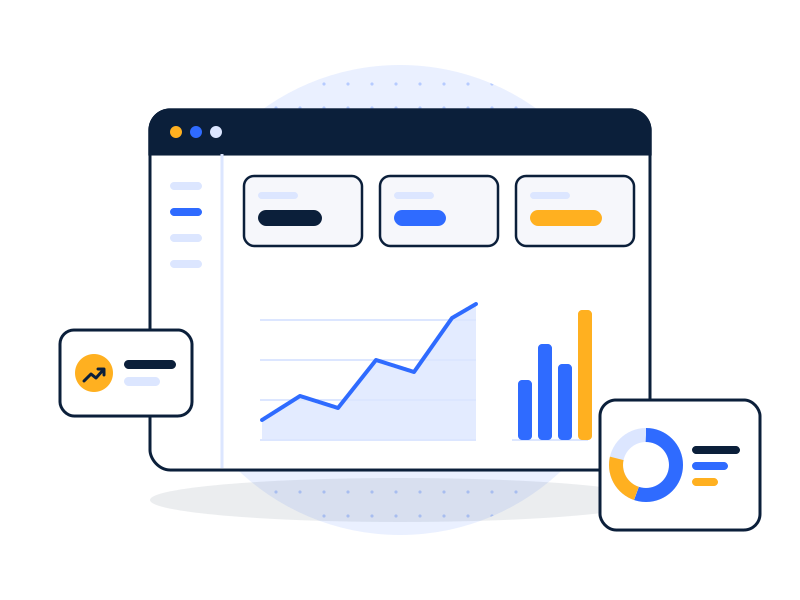
Executive, finance, sales and operations dashboards built on shared models. See Power BI consulting and business intelligence consulting for how we build them.
Advanced Analytics and Forecasting
Once history sits in one place, we add demand and revenue forecasts, customer segmentation and anomaly alerts. A person reviews every model’s output before it changes a decision.
Data Security and Governance
Encryption, role-based access, row-level security and audit logs, set up as part of the build, not added later. More below and on data security services.
Training and Handover
Plain-English documentation and training for report users, report builders and data owners, so your team can run it without us.
What Business Questions Does Data Analytics Answer?
| Team | Questions we help answer | Typical sources |
|---|---|---|
| Leadership | Are we on plan? Which product, region or customer drives profit? | All sources via the warehouse |
| Finance | Where is margin leaking? How does cash look in 13 weeks? | ERP, accounting, billing |
| Sales and marketing | Which channels bring customers who stay? What is the real win rate by segment? | CRM, ad platforms, web analytics |
| Operations | Where are the delays? What will demand look like next month? | ERP, WMS, TMS, spreadsheets |
| Customer success | Which accounts are at risk before they cancel? | Support desk, product usage, billing |
For industry examples, see Power BI for logistics and Power BI for manufacturing.
Data Analytics Consulting vs Hiring In-house: Which Fits?
Both work. The right choice depends on where you are.
- Hire in-house when you already have clean, central data and need someone to keep answering new questions every week.
- Bring in consultants when the foundation isn’t there yet: no warehouse, conflicting definitions, reports built on exports. One analyst hired into that mess usually spends the first year cleaning data alone.
- Do both when you want the foundation built quickly and an internal owner to take it over. We often train the person you hire.
Our aim is to make ourselves optional. You own the code, the models and the documentation, inside your own cloud accounts.
How Do We Keep Analytics Data Secure and HIPAA-ready?
Security is the first design decision on every project, not the last. Analytics pulls your most sensitive data into one place, so that place has to be locked down properly.
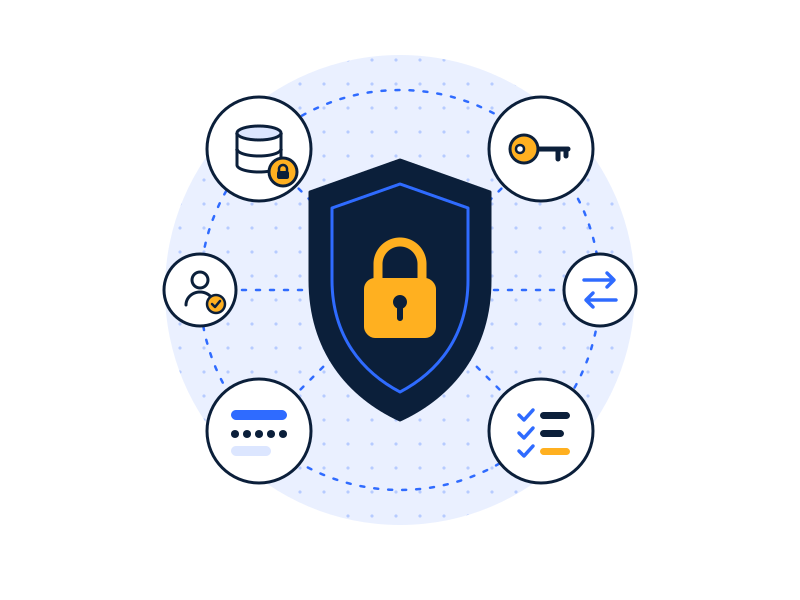
What we build in as standard:
- Encryption of data at rest and in transit (TLS) across the warehouse, pipelines and BI tool.
- Least-privilege access. People and service accounts get only the data their role needs. Access goes through groups, not individual shares.
- Multi-factor authentication enforced through your identity provider, such as Microsoft Entra ID or Google Workspace.
- Row-level security so a regional manager sees their region, and a sales rep sees their accounts.
- Audit logs of who accessed or changed what, kept where your admins can review them.
- Work inside your tenant. We work in your own cloud and Microsoft accounts under NDA, so access can be removed in minutes when a project ends.
If your data includes protected health information (PHI), we design to the HIPAA Security Rule’s technical safeguards: access control, audit controls, integrity, person or entity authentication and transmission security. We also apply minimum-necessary design, so dashboards show only the health data a role needs, and de-identify data where reporting doesn’t need identities. HIPAA compliance is something your organization maintains; we build the technical controls that support it. See data security services.
How Does Our Data Analytics Consulting Process Work?

- Audit
- Architect
- Build & Secure
- Run & Improve
- Audit. Sources, current reports, data quality and access. You get a ranked list of what to fix and what to build first.
- Architect. KPI definitions, warehouse design, security roles and tool choice, agreed with the people who own each number.
- Build & Secure. Pipelines, models and dashboards, delivered in weekly increments, with access controls in place before anyone sees real data. Every key number is reconciled against the source system.
- Run & Improve. Monitoring for failed refreshes and pipelines, training, documentation, then optional ongoing support.
What Does a Data Analytics Project Look Like?
Illustrative example. Not a client project.
An 80-person distributor runs NetSuite, HubSpot and a shared drive of spreadsheets. The owners want to know which customers are profitable after freight and discounts. Today it takes a week of exports.
- Audit: three sources, two definitions of gross margin, freight costs stuck in a spreadsheet.
- Architect: one customer and product hierarchy; margin defined after freight, rebates and discounts.
- Build & Secure: pipelines into a small cloud warehouse, a margin model, row-level security by sales region, MFA enforced.
- Run & Improve: weekly customer profitability dashboard, plus an alert when a customer’s margin drops below target.
The aim: a profitability view each Monday instead of a week of spreadsheet work.
Who Do We Work With?
Mid-sized companies in the US, Canada and Australia, usually 50 to 1,000 people, with a few core systems and no central data team yet.
Related: data warehouse consulting · business intelligence consulting · Power BI consulting · Microsoft Fabric consulting · data security services
FAQs
What does a data analytics consultant do?
A data analytics consultant helps a company turn raw data into reliable answers. The work covers auditing data sources, agreeing KPI definitions, building pipelines and a data warehouse, designing data models, creating dashboards and forecasts, and setting up security and governance. A good consultant also trains your team so the work keeps running after handover.
What is the difference between data analytics and business intelligence?
Business intelligence focuses on reporting what happened, through dashboards and standard reports. Data analytics is broader: it includes BI plus deeper analysis of why things happened and what is likely next, such as forecasting and segmentation. In practice, both depend on the same foundation of clean, integrated data in a warehouse.
How long does a data analytics project take?
It depends mostly on data quality, the number of sources and how quickly metric owners agree definitions. A focused first scope, such as one department’s dashboards, is much shorter than a program with many sources, which runs in phases. We give you a realistic estimate after the audit.
Which tools do you use?
We work with Power BI, Tableau, Looker and Qlik for reporting; Snowflake, BigQuery, Redshift, Azure SQL and Microsoft Fabric for warehousing; and dbt, Fivetran, Azure Data Factory and AWS Glue for pipelines. We recommend tools based on what you already own and what your team can maintain.
Can you work with health data under HIPAA?
Yes. When a project includes protected health information, we design to the HIPAA Security Rule’s technical safeguards: encryption, least-privilege access, MFA, audit logs, row-level security and minimum-necessary data design. HIPAA compliance remains your organization’s responsibility; we build and document the technical controls that support it.
Get One Version of the Numbers.
In a free 30-minute data audit we’ll look at your sources and reports and tell you what to fix first.