
By Hoist DigiSoft Data Team · Last updated 2026-11-04
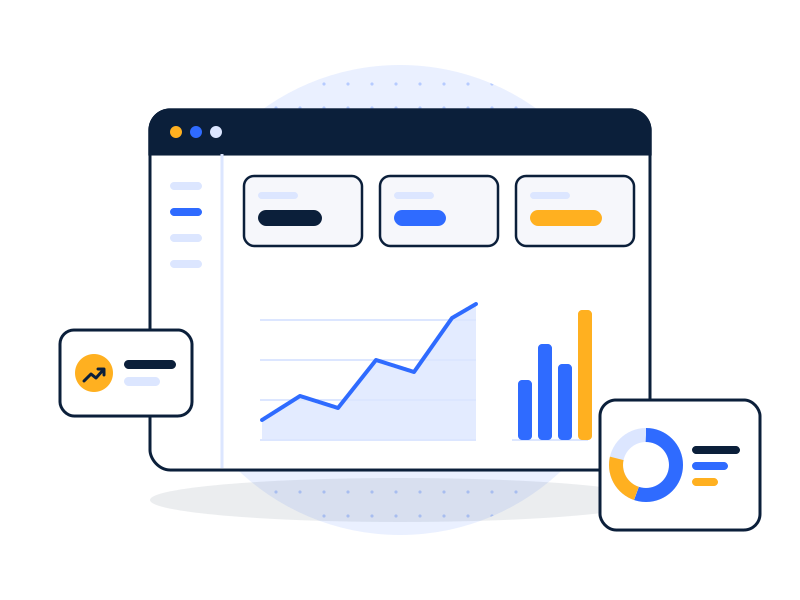
Business intelligence consulting is outside expertise to turn a company’s scattered data into trusted dashboards and reports. A typical engagement includes a data and reporting audit, a KPI framework, data integration and modeling, dashboard development, access and governance setup, and training. The goal is that everyone makes decisions from one agreed version of the numbers.
What is business intelligence consulting, exactly?
Business intelligence (BI) is everything between raw data and a decision: collecting data from your systems, storing it, cleaning it, defining metrics, and presenting it so people can act. BI consulting is bringing in specialists to design and build that, usually because the internal team doesn’t have the time or the full mix of skills.
It’s often confused with buying a BI tool. The tool (Power BI, Tableau, Looker, Qlik) is the visible part. Consulting covers the parts that decide whether the tool shows the right numbers: where data comes from, how it’s combined, how each metric is defined, and who can see what.
If you want our service view, see business intelligence consulting. This post explains what a good engagement includes, so you can judge any proposal, ours included.
Why do companies hire BI consultants?
The trigger is rarely “we want BI”. It’s usually one of these:
- Two departments brought different revenue numbers to the same meeting.
- Month-end or the board pack takes days of copy-paste.
- The company bought Power BI or Tableau and adoption faded.
- The one person who understood the reporting spreadsheet left.
- Leadership wants forecasting or AI, and someone pointed out the data isn’t ready.
Behind most of these is data spread across systems that don’t talk to each other. MuleSoft’s 2025 Connectivity Benchmark, a survey of more than 1,050 IT leaders, found the average enterprise manages 897 applications and only 29% are integrated. Bad data is also expensive: Gartner estimates poor data quality costs organizations an average of $12.9 million a year.
What are the phases and deliverables of a BI engagement?
A well-run BI engagement moves through four phases. Here’s what you should receive in each.
| Phase | What happens | Deliverables you should get |
|---|---|---|
| 1. Audit | Review current reports, sources, data quality, tools, licenses and access | Findings document; source inventory; ranked list of issues; recommended first scope |
| 2. Architect | Agree KPIs and definitions; design the data model, storage and security | KPI catalog (definition, owner, source, refresh); data model design; architecture and access plan |
| 3. Build & Secure | Pipelines, warehouse models, semantic model, dashboards, security roles | Working pipelines with tests; warehouse/semantic model; dashboards; row-level security; reconciliation report |
| 4. Run & Improve | Rollout, training, documentation, monitoring, iteration | Training sessions; plain-English documentation; refresh monitoring; backlog of next improvements |
Let’s go through the parts that matter most.
The audit
A BI consultant should look at what you have before proposing anything: every report people actually use, where its data comes from, how long it takes to produce, and who sees it. A good audit finds problems you didn’t ask about, like five definitions of “active customer” or a shared login on the finance database.
The KPI catalog
This is the most undervalued deliverable in BI. For each metric: the exact definition, the owner who can change it, the source system and the refresh frequency. Without it, dashboards drift apart within months. With it, arguments about numbers become a quick look-up.
Data integration and modeling
Unless your data already sits in one clean place, a real BI engagement includes moving it there. That usually means pipelines into a data warehouse and a star schema model on top. Metric logic goes into a semantic layer so every report uses the same calculation. Our post on how to consolidate data from multiple sources walks through this step by step.
Dashboards
Every dashboard should have a named audience and a question it answers. Executive dashboards show a handful of KPIs with targets and trends. Departmental dashboards go deeper. Operational dashboards are for daily action. More dashboards isn’t better; used dashboards are.
Governance and security
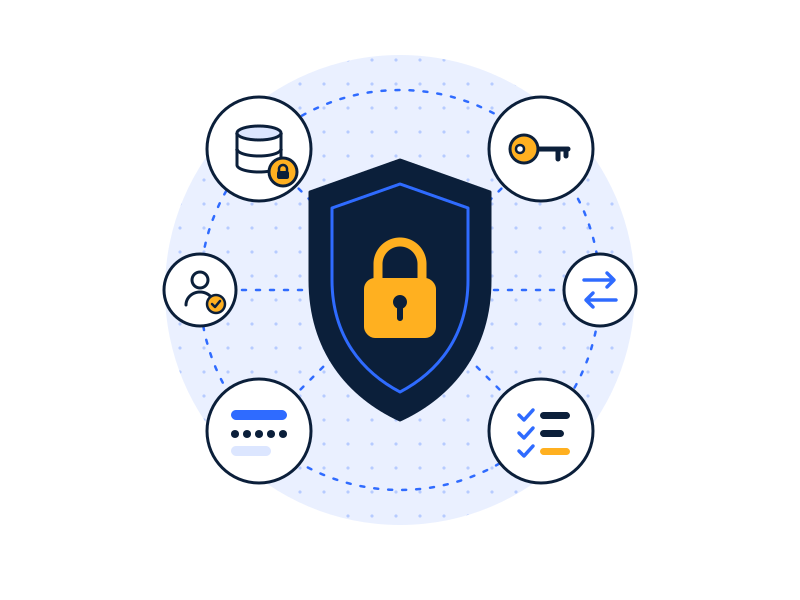
Who can see which rows, who can publish, how changes are approved, and how you know data is fresh. This includes role-based access, row-level security, certified datasets and refresh alerts. It should be built in from the start, along with encryption of data at rest and in transit. See RBAC.
Training and handover
You should be able to run the result without the consultant. That means training for viewers, report builders and model owners, and documentation written for people, not auditors.
BI consulting vs in-house hire vs freelancer vs vendor services: which fits?
| Option | Strengths | Limits | Usually fits when |
|---|---|---|---|
| BI consulting firm | Team with pipeline, modeling, dashboard and security skills; delivers a defined build | Needs clear scope; you must own definitions | You need a foundation built or rebuilt in a few months |
| In-house BI analyst | Knows the business deeply; always available | One person rarely covers engineering, modeling and security; hiring takes time | You have a working foundation and steady ongoing requests |
| Freelancer | Flexible for a specific task | Continuity and documentation risk; narrow skill set | A well-defined, small piece of work |
| Software vendor’s services | Deep knowledge of their own tool | Tool-first view; less help with sources and definitions | You’re mid-implementation of that vendor’s product |
Many mid-sized companies combine the first two: a consulting firm builds the foundation, then one internal analyst owns and extends it.
What drives the cost and timeline of BI consulting?
We don’t publish prices, and you should be wary of anyone who quotes before seeing your data. These are the factors that drive effort:
- Number and type of sources. Modern SaaS tools with good APIs are quick. Old on-premises systems and spreadsheets take longer.
- Data quality. Duplicates, missing values and changed codes all need fixing before reports can be trusted.
- Definition agreement. Getting sales and finance to agree on “revenue” can take longer than the build.
- Number of audiences. One executive dashboard is a different job from rollouts to ten departments.
- Security requirements. Row-level security, regulated data and audit needs add design and testing work.
- Existing tools. Building on licenses you already own is usually faster and cheaper than switching.
A first scope (two or three sources and a handful of dashboards) commonly takes six to ten weeks. Larger programs run in phases.
What should a good BI consultant ask you?
You can tell a lot from the first conversation. A good BI consultant will ask:
- What decisions do you make every week, and what numbers do they depend on?
- Which reports do people actually use, and which do they ignore?
- Where does each of those numbers come from today?
- Who owns the definition of each key metric?
- Who should see what, and is any of the data sensitive or regulated?
- What tools and licenses do you already pay for?
- Who will maintain this after the project?
If the first meeting is a product demo instead, be careful.
What are the warning signs in a BI proposal?
- Dashboards with no data work. If the proposal jumps straight to visuals on top of messy sources, the numbers won’t hold.
- No reconciliation step. Ask how they’ll prove dashboard numbers match your source systems.
- No named people. You should know who leads the work and their hands-on experience.
- Vague security. Ask where your data will be stored, how access is granted and revoked, and whether they work in your cloud account.
- No handover plan. Documentation and training should be in scope, not extras.
- Guaranteed ROI figures before an audit. Nobody can know that yet.
If Power BI is your tool, our guide on how to choose a Power BI consultant goes deeper on questions specific to Power BI.
Where do BI projects usually start?
The most common starting points are a single source of truth for finance and operations, automated reporting to replace a painful spreadsheet, or a set of executive KPI dashboards. Pick the one that costs you the most time today.
FAQs
What does a business intelligence consultant do?
A business intelligence consultant designs and builds the systems that turn company data into reliable reports. They audit current reporting, agree KPI definitions, connect data sources, build data models and dashboards, set up access rules, and train users. Good consultants also reconcile numbers against source systems before anyone relies on them.
What are the main deliverables of BI consulting?
The main deliverables of BI consulting are an audit of current reporting, a KPI catalog with agreed definitions, data pipelines and a data model, dashboards for named audiences, security and governance settings, a reconciliation report, training, and plain-English documentation so your team can run it afterward.
How long does a BI consulting project take?
A first BI consulting project, covering two or three data sources and a handful of dashboards, typically takes six to ten weeks. Company-wide programs run in phases over several months. The biggest variables are source data quality and how quickly metric owners agree on definitions.
Do we need a data warehouse for BI?
Not always. With one or two clean sources, a BI tool can connect directly. Once you combine several systems, need multi-year history, or have slow reports, a data warehouse becomes the more reliable and usually cheaper foundation. A BI audit should tell you which situation you’re in.
Want an honest read on your reporting? Book a free 30-min data audit · Fix my reporting